
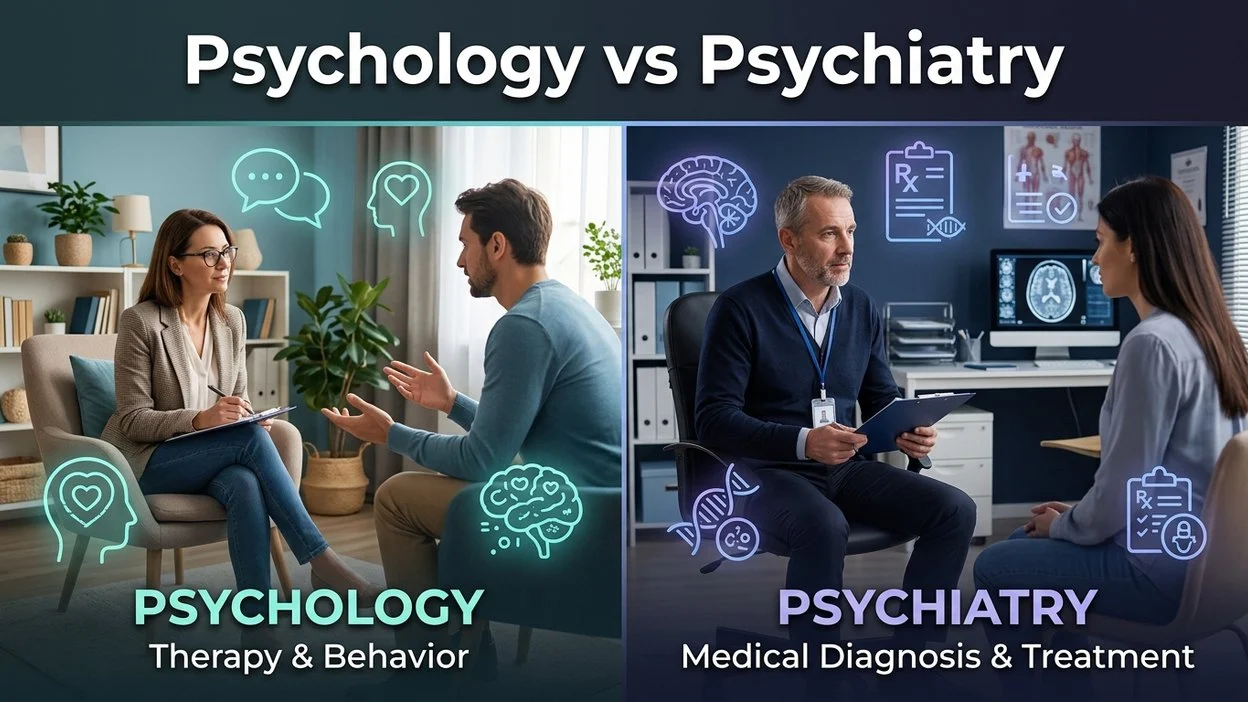
Psychology and psychiatry both focus on mental health, emotions, behavior, and psychological well-being, but they are different fields. Psychology mainly studies behavior, thoughts, emotions, and mental processes, while psychiatry is a medical specialty focused on diagnosing and treating mental health conditions. Psychiatrists are medical doctors, while psychologists are trained in psychology and psychological assessment and treatment.
The two professions can overlap, and psychologists and psychiatrists may work together when a person needs different types of mental health support. Psychologists commonly provide psychotherapy and behavioral interventions, while psychiatrists can diagnose mental health conditions, provide medical treatment, and prescribe medication where legally authorized. The exact roles, training requirements, and prescribing rules can vary by country or jurisdiction. Understanding the difference between psychology and psychiatry can help you choose the type of professional that best matches your needs.
Quick Answer
Psychology focuses mainly on thoughts, emotions, behavior, and psychological treatment, especially through psychotherapy. Psychiatry is a medical specialty that focuses on mental health conditions and their medical treatment. Psychiatrists are medical doctors and can prescribe medication where authorized, while psychologists generally focus on psychological assessment and therapy.
Why Do People Confuse Psychology and Psychiatry?
Psychology and psychiatry are often confused because both deal with mental health and may treat similar concerns, including anxiety, depression, trauma, and other psychological difficulties.
The biggest difference is their training and professional approach.
A psychiatrist first becomes a medical doctor and then specializes in psychiatry. A psychologist receives advanced education and professional training in psychology.
Both professionals can provide important mental health services, but their roles are not identical.
First Word: Psychology
Psychology is the scientific study of the mind, behavior, emotions, and mental processes.
Psychologists study how people think, feel, learn, develop, interact, and respond to different situations. Clinical and counseling psychologists may also provide psychological assessment and psychotherapy, depending on their training and local licensing rules.
Psychology includes several areas, such as:
- Clinical psychology
- Counseling psychology
- Developmental psychology
- Educational psychology
- Social psychology
- Cognitive psychology
- Industrial-organizational psychology
- Health psychology
A psychologist may use talking therapies and behavioral techniques to help people manage emotional or psychological difficulties.
Second Word: Psychiatry
Psychiatry is a branch of medicine focused on mental health and mental health conditions.
A psychiatrist is a medical doctor who has completed medical training and specialized training in psychiatry. Because psychiatrists are physicians, they can evaluate mental health concerns from a medical perspective and may prescribe medication where permitted.
Psychiatrists may use several approaches, including:
- Medication
- Psychotherapy
- Medical assessment
- Behavioral approaches
- Lifestyle recommendations
- Coordination with other healthcare professionals
Psychiatrists may treat conditions such as depression, anxiety disorders, bipolar disorder, schizophrenia, substance use disorders, and other mental health conditions.
Psychology vs Psychiatry Comparison Table
| Feature | Psychology | Psychiatry |
| Main field | Psychology | Medicine |
| Professional | Psychologist | Psychiatrist |
| Medical doctor? | Generally no | Yes |
| Main focus | Behavior, thoughts, emotions, mental processes | Mental health conditions and their medical treatment |
| Therapy | Commonly provided by clinical/counseling psychologists | May be provided depending on psychiatrist’s training |
| Medication | Generally not prescribed by psychologists | Psychiatrists can prescribe where legally authorized |
| Psychological testing | Often part of professional practice, depending on training and jurisdiction | May use assessments but typically has a medical focus |
| Medical training | Psychology-focused education and training | Medical degree plus psychiatry specialization |
| Common approach | Psychotherapy, assessment, behavioral interventions | Medication, medical assessment, psychotherapy, and other treatments |
| Work settings | Clinics, hospitals, schools, private practices, organizations | Hospitals, clinics, medical centers, private practices |
| Main goal | Improve psychological well-being and behavior | Diagnose and treat mental health conditions |
When Should You See a Psychologist?
A psychologist may be a good choice when your main goal is to understand thoughts, emotions, behaviors, relationships, or coping patterns and work on them through psychological treatment.
You might consider a psychologist for:
- Anxiety and excessive worry
- Stress management
- Relationship difficulties
- Grief and loss
- Trauma-related concerns
- Behavioral problems
- Life transitions
- Self-esteem difficulties
- Coping with chronic stress
- Psychological assessment
The appropriate professional depends on the concern and the psychologist’s area of training.
When Should You See a Psychiatrist?
A psychiatrist may be appropriate when you need a medical evaluation of a mental health condition or when medication may be part of treatment.
A psychiatrist may help with:
- Depression
- Bipolar disorder
- Schizophrenia
- Severe anxiety
- Psychotic symptoms
- Complex mental health conditions
- Medication evaluation and management
- Mental health conditions requiring medical monitoring
Psychiatrists can also refer or work with psychologists and other mental health professionals when combined treatment is useful.
10+ Examples of Psychology and Psychiatry
1. Talking About Anxiety
A psychologist may help a person identify anxious thoughts and develop healthier ways to respond to them through psychotherapy.
A psychiatrist can evaluate the condition medically and determine whether medication or another medical treatment may be appropriate.
2. Treating Depression
A psychologist may provide psychotherapy that addresses thoughts, emotions, behaviors, and coping strategies.
A psychiatrist can assess depression medically and may prescribe antidepressant medication when appropriate.
3. Managing Stress
Psychological treatment can help people recognize stress patterns and develop coping skills.
A psychiatrist may become involved when stress is connected with a more significant or complex mental health condition.
4. Understanding Behavior
Psychology examines how experiences, thoughts, emotions, learning, and social factors can influence behavior.
Psychiatry can also consider these factors while evaluating mental health conditions from a medical perspective.
5. Psychological Testing
Psychologists with appropriate training may conduct psychological assessments or tests to understand cognitive, emotional, behavioral, or personality-related characteristics.
6. Medication Management
Psychiatrists can prescribe and manage psychiatric medications where authorized.
Psychologists generally do not prescribe medication, although prescribing authority varies in limited circumstances and jurisdictions.
7. Therapy
Psychologists commonly provide psychotherapy.
Some psychiatrists also provide psychotherapy, although their practice may focus more heavily on medication management and medical treatment.
8. Severe Mental Health Symptoms
A psychiatrist may be particularly important when someone experiences severe symptoms that require medical assessment, such as hallucinations, delusions, or significant mood disturbances.
9. Childhood and Adolescent Concerns
Psychologists and psychiatrists can both work with children and teenagers, depending on their specialty.
The choice may depend on whether the primary need involves psychological therapy, assessment, medication, or a combination of services.
10. Trauma
A psychologist may provide trauma-focused psychotherapy and help a person develop coping strategies.
A psychiatrist can assess associated mental health conditions and consider medication when appropriate.
11. Long-Term Mental Health Care
Some people benefit from ongoing psychotherapy, medication management, or both.
Psychologists and psychiatrists may coordinate care to address different aspects of a person’s mental health.
12. Workplace or School Concerns
Psychologists may help address learning, behavioral, emotional, or workplace-related issues, depending on their specialty.
Psychiatrists are more likely to become involved when a medical mental health assessment or psychiatric treatment is required.
Common Mistakes
Mistake 1: Thinking Psychology and Psychiatry Are the Same
They are related but separate fields. Psychology is centered on psychological science and practice, while psychiatry is a medical specialty.
Mistake 2: Assuming Psychologists Are Medical Doctors
Psychologists are not generally medical doctors. Their education and professional training are different from those of physicians.
Mistake 3: Assuming Psychiatrists Only Prescribe Medication
Psychiatrists can provide psychotherapy and other forms of treatment, although the amount of therapy they provide varies by practitioner and setting.
Mistake 4: Thinking Psychologists Never Work in Hospitals
Psychologists can work in hospitals, medical centers, clinics, rehabilitation settings, and other healthcare environments.
Mistake 5: Assuming Everyone Needs Medication
Medication is not appropriate or necessary for every mental health concern. Treatment depends on the individual’s condition, circumstances, preferences, and clinical evaluation.
Mistake 6: Choosing a Professional Based Only on the Title
The professional’s specialty, experience, treatment approach, and the nature of the concern are also important.
Memory Trick
Use this simple memory trick:
Psychology = Mind + Behavior
Think about psychologists as professionals who focus heavily on thoughts, emotions, behavior, and psychological processes.
Psychiatry = Medicine + Mental Health
Think about psychiatrists as medical doctors who specialize in mental health.
A quick way to remember the difference:
Psychologist → psychological treatment and assessment
Psychiatrist → medical mental health care and treatment
American vs British English
The terms psychology, psychologist, psychiatry, and psychiatrist are used in both American and British English.
The main differences are usually related to professional titles, training systems, and healthcare regulations rather than spelling.
In both varieties of English:
- Psychologist refers to a professional trained in psychology.
- Psychiatrist refers to a medical doctor specializing in psychiatry.
- Psychology refers to the scientific field concerned with mind and behavior.
- Psychiatry refers to the medical specialty focused on mental health.
Professional qualifications and prescribing rules differ between countries, so terminology should always be understood within the relevant healthcare system.
Similar Words
Several terms are closely related to psychology and psychiatry:
- Psychologist: A professional trained in psychology who may provide assessment or psychological treatment, depending on qualifications and licensing.
- Psychiatrist: A medical doctor specializing in mental health.
- Psychotherapist: A professional who provides psychotherapy; the specific qualifications vary by jurisdiction.
- Therapist: A broad term that can refer to professionals who provide different forms of therapy.
- Counselor: A professional who provides counseling within their education and professional scope.
- Clinical psychology: A branch of psychology focused on psychological assessment and treatment of mental and behavioral difficulties.
- Mental health: A person’s psychological, emotional, and social well-being.
- Psychotherapy: A structured psychological treatment that uses conversation and therapeutic techniques to address emotional or behavioral difficulties.
Final Verdict
The main difference between psychology and psychiatry is that psychology is a field focused on the mind, behavior, emotions, and psychological processes, while psychiatry is a medical specialty focused on diagnosing and treating mental health conditions.
If you mainly want psychotherapy, psychological assessment, or help understanding thoughts and behaviors, a qualified psychologist may be appropriate. If you need a medical mental health evaluation or medication management, a psychiatrist may be more suitable.
In some situations, both professionals can work together. For example, a psychiatrist may manage medication while a psychologist provides psychotherapy.
FAQs:
1. What is the main difference between psychology and psychiatry?
Psychology focuses mainly on the mind, behavior, emotions, and psychological treatment. Psychiatry is a medical specialty focused on mental health conditions and their medical treatment.
2. Is a psychiatrist a doctor?
Yes. A psychiatrist is a medical doctor who completes medical training and then specializes in psychiatry.
3. Is a psychologist a doctor?
Psychologists are generally not medical doctors. Some psychologists may hold doctoral degrees, such as a PhD or PsyD, but these are different from medical degrees.
4. Can psychologists prescribe medication?
In most jurisdictions, psychologists do not prescribe medication. There are limited exceptions in certain jurisdictions where specially trained psychologists may have prescribing authority.
5. Is psychology or psychiatry better?
Neither field is universally better. The right professional depends on what kind of help you need. Psychotherapy may be central to psychological treatment, while psychiatric care can provide medical evaluation and medication management when appropriate.
6. Can a psychologist and psychiatrist work together?
Yes. They can work together when a person may benefit from both psychotherapy and medical psychiatric treatment.
7. Should I see a psychologist or psychiatrist for anxiety?
It depends on the severity and nature of the symptoms. A psychologist may help with psychotherapy and coping strategies, while a psychiatrist can provide medical evaluation and consider medication when appropriate.
8. Which is harder, psychology or psychiatry?
They require different types of education and training. Psychiatry requires medical school followed by specialty training, while psychology requires advanced education and professional training in psychology. Difficulty should not be judged only by the length of training.
Remember This
The easiest way to remember the difference is:
Psychology = thoughts, emotions, behavior, and psychological treatment.
Psychiatry = medical specialty for mental health conditions.
A psychologist and psychiatrist may both help with mental health, but they reach that goal through different professional training and approaches.
Conclusion:
Psychology and psychiatry are closely connected fields, but they are not the same. Psychology focuses on understanding the mind and behavior and may involve psychological assessment and psychotherapy. Psychiatry is a branch of medicine in which doctors evaluate and treat mental health conditions using medical and psychological approaches.
Choosing between a psychologist and psychiatrist depends on your individual needs. Some people benefit from psychotherapy, some may need psychiatric assessment or medication, and others may benefit from both. If you are unsure where to start, a primary care professional or qualified mental health provider can help guide you toward appropriate care.

Delaney Brooks is a contemporary author celebrated for heartfelt fiction, vivid storytelling, and relatable characters. Her engaging novels inspire readers through emotional depth, creativity, resilience, and memorable literary journeys.