
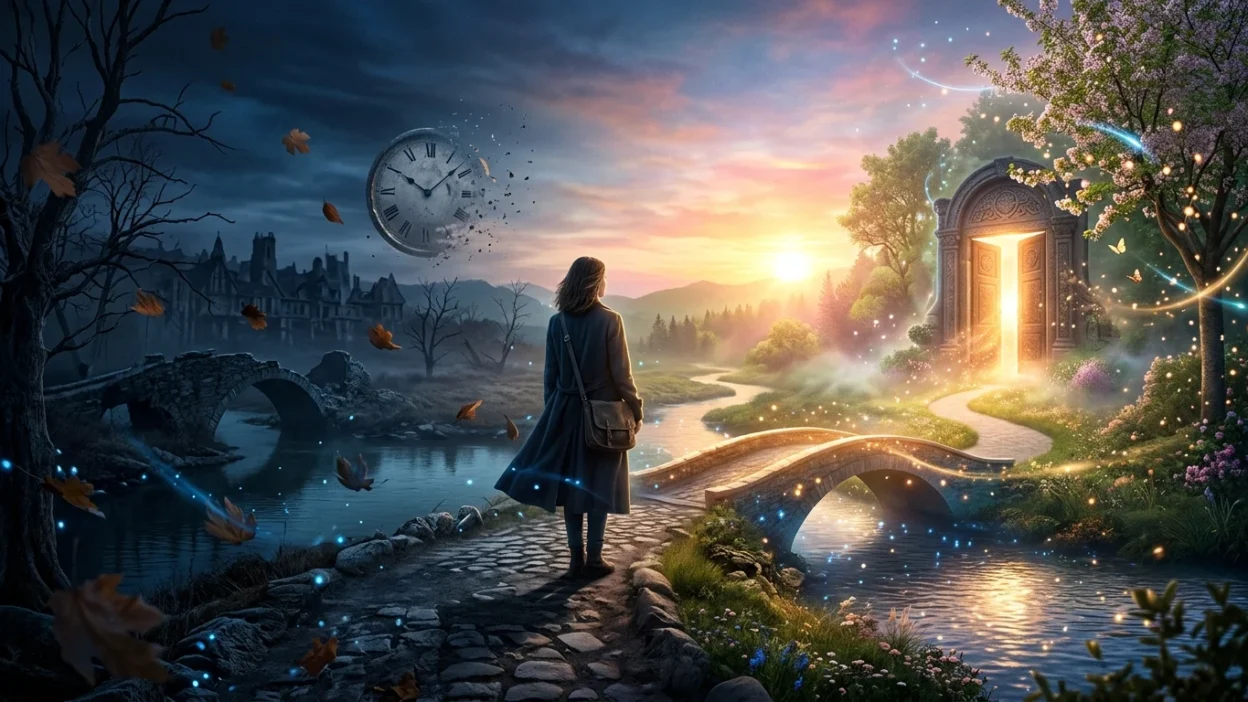
Dreams often speak in symbols rather than direct statements. One of the most meaningful themes is symbolic transitions in dreams, where your dream reflects change, endings, new beginnings, personal growth, or movement from one stage of life to another.
A transition in a dream may appear as moving to a new house, crossing a bridge, traveling somewhere unfamiliar, becoming a different age, leaving someone behind, or entering a new environment.
These dreams can feel confusing, emotional, exciting, or even frightening. However, they often reflect something important happening within your emotions, relationships, identity, or circumstances.
Quick Answer: What Do Symbolic Transitions in Dreams Mean?
Symbolic transitions in dreams usually represent change, personal growth, emotional transformation, endings, or the beginning of a new chapter in life. The meaning depends on the dream’s setting, your emotions, and what is currently changing in your waking life.
A peaceful transition may suggest acceptance and growth, while a difficult transition can symbolize fear, uncertainty, resistance, or anxiety about the future.
In dream interpretation, transitions are rarely about one specific event. Instead, they often represent your journey from one emotional or psychological state to another.
What Are Symbolic Transitions in Dreams?
Symbolic transitions are dream experiences that represent movement from one condition, situation, identity, or stage to another.
Your dream may show this transition literally or through powerful imagery.
Common examples include:
- Moving from one house to another
- Crossing a bridge or road
- Walking through a doorway
- Traveling to an unfamiliar place
- Leaving a school, workplace, or relationship
- Watching seasons change
- Becoming older or younger
- Seeing a baby being born
- Going through a death or rebirth experience
- Moving from darkness into light
- Going upstairs or downstairs
- Getting on or off a train, bus, boat, or airplane
- Entering or leaving water
- Closing one door and opening another
These images can function as a subconscious message about changes you are experiencing or preparing to experience.
Sometimes the dream reflects an obvious transition, such as starting a new job. Other times, it represents an internal transformation that you have not consciously recognized yet.
Symbolism of Transitions in Dreams
The symbolism of transitions is strongly connected with movement and transformation.
A transition suggests that something is no longer exactly as it was. You may be leaving behind an old identity, belief, relationship, habit, fear, or emotional pattern.
Doors and Gateways
Doors often symbolize opportunities, choices, endings, and new beginnings.
An open door may represent readiness to move forward. A locked door can symbolize obstacles, hesitation, or an opportunity that currently feels unavailable.
Bridges
Bridges commonly represent the connection between two stages of life.
Dreaming of crossing a bridge may suggest that you are moving away from the past and toward something new.
If the bridge feels safe, you may feel confident about your transition. If it is unstable or frightening, the dream may reflect uncertainty.
Roads and Journeys
Roads can symbolize your personal life path.
A clear road may suggest direction and confidence, while a confusing road can represent uncertainty about an important decision.
Water
Water is strongly associated with emotions and the unconscious mind.
Crossing calm water may symbolize emotional acceptance, while struggling through rough water may represent difficulty adjusting to change.
Seasons
Changing seasons can represent natural cycles.
Spring may symbolize renewal, summer can suggest growth, autumn may represent release, and winter can symbolize rest, endings, or an inward period of reflection.
Spiritual Meaning of Symbolic Transitions in Dreams
From a spiritual perspective, symbolic transitions in dreams may represent transformation, spiritual growth, preparation, or movement into a new phase of life.
Some people interpret these dreams as signs that they are being encouraged to release the past and become more open to what lies ahead.
A transition dream may spiritually suggest:
- Letting go of an outdated part of yourself
- Preparing for a new chapter
- Growing in wisdom
- Moving away from negative influences
- Developing greater self awareness
- Accepting a necessary ending
- Becoming spiritually stronger
- Trusting the process of change
However, spiritual dream interpretation should not automatically be treated as a prediction of the future.
The dream may be expressing your inner spiritual journey rather than announcing a specific event.
If the dream leaves you feeling peaceful, hopeful, or renewed, it may symbolize acceptance and spiritual development. If it leaves you frightened or overwhelmed, it may reveal fears that need attention.
Psychological Interpretation of Transition Dreams
Psychologically, transition dreams often reflect the brain’s way of processing change.
Major life events can produce these dreams, including moving, marriage, divorce, graduation, career changes, becoming a parent, losing someone, entering a new relationship, or changing personal beliefs.
Even smaller changes can trigger symbolic dreams.
Your subconscious may use a journey, doorway, transformation, or unfamiliar environment to represent emotions that are difficult to express during waking life.
For example, dreaming about leaving an old house might symbolize more than moving physically. The house could represent your previous identity, memories, or emotional state.
From a psychological perspective, the key question is:
“What am I moving away from, and what am I moving toward?”
Your answer may reveal the central message behind the dream.
Common Symbolic Transition Dream Scenarios
Different versions of transition dreams can carry different meanings. Your emotional reaction is especially important.
Dreaming of a Single Transition
A single, clear transition may represent one important change in your waking life.
You may be approaching a decision, ending a chapter, starting something new, or becoming aware that your priorities have changed.
If the transition feels natural, the dream may indicate acceptance.
If it feels sudden or frightening, you may be struggling to adjust.
Dreaming of Many Transitions
Experiencing several transitions in one dream can symbolize a period of major change.
You may feel that everything is happening at once.
This dream can appear when relationships, work, family responsibilities, personal beliefs, or goals are changing simultaneously.
It may also indicate that you are mentally trying to organize several uncertainties.
Dreaming of a Baby During a Transition
A baby in a transition dream often symbolizes something new that is developing.
It could represent:
- A new goal
- A new relationship
- A creative idea
- Personal growth
- A new identity
- A fresh opportunity
A healthy or happy baby may represent hope and potential.
A crying or neglected baby could symbolize a new responsibility that you feel unprepared to handle.
Dreaming of a Dead Person During a Transition
Dreams involving someone who has died can be emotionally powerful.
When such a person appears during a transition, the dream may symbolize memories, unfinished emotions, or the influence that person had on your life.
The dream does not necessarily mean that something negative will happen.
Symbolically, the deceased person may represent your connection with the past while you are moving toward a new chapter.
Dreaming of a Transition That Attacks You
If the transition itself feels threatening or something prevents you from moving forward, the dream may represent resistance to change.
You may know that something needs to change but emotionally feel unable to accept it.
An attacking figure can also represent fear, pressure, guilt, or uncertainty connected with the transition.
Ask yourself what change currently makes you uncomfortable.
Dreaming of Being Chased During a Transition
Being chased is one of the most common anxiety related dream patterns.
When chasing occurs alongside a transition, it may suggest that you are trying to escape something connected with your past.
You could be avoiding a difficult decision, responsibility, emotional issue, or conversation.
The dream may be encouraging you to face what you are running from rather than continually avoiding it.
Dreaming of Holding Something During a Transition
Holding an object, person, child, or animal during a transition can symbolize attachment.
You may be moving forward but still want to preserve something from your previous life.
This is not necessarily negative.
Some transitions require you to carry valuable lessons, memories, relationships, or beliefs with you rather than abandoning everything from the past.
Dreaming of a Friendly or Peaceful Transition
A peaceful transition is generally associated with acceptance, emotional maturity, and confidence.
You may be ready for change even if you do not know exactly what comes next.
Dreams involving sunlight, open spaces, calm water, friendly people, or beautiful destinations can reinforce the symbolism of positive transformation.
Positive vs Negative Meaning of Symbolic Transitions
| Positive Symbolism | Negative Symbolism |
| New beginnings | Fear of change |
| Personal growth | Resistance |
| Emotional healing | Unresolved emotions |
| New opportunities | Uncertainty |
| Spiritual development | Loss of control |
| Acceptance | Anxiety |
| Freedom | Attachment to the past |
| Transformation | Feeling unprepared |
The same symbol can have either a positive or negative meaning depending on how you felt during the dream.
For example, walking through an unfamiliar door may represent exciting opportunity if you felt curious. If you felt terrified, it may represent uncertainty about the future.
Cultural and Biblical Meaning of Transition Dreams
Across many cultures, dreams involving journeys, doors, births, deaths, water, and changing environments have been associated with transformation.
These interpretations vary widely, so there is no single universal meaning.
From a biblical perspective, transitions can be understood through themes such as transformation, leaving one stage behind, entering a new season, testing, spiritual growth, and renewal.
Biblical dream symbolism often places importance on journeys and changes in circumstances. A journey can represent movement, while crossing from one place to another may symbolize entering a different stage of life.
However, not every transition dream should be treated as a divine message or prophecy.
A balanced approach is to consider the dream alongside your personal circumstances, emotions, beliefs, and experiences.
What Are Symbolic Transitions in Dreams Trying to Tell You?
Your dream may be asking you to recognize that something in your life is changing.
The transition could be external, such as a job or relationship, or internal, such as becoming more confident, independent, mature, or emotionally aware.
Your subconscious message may be:
- “It is time to let go.”
- “You are becoming a different version of yourself.”
- “Do not be afraid of the unknown.”
- “Something new is developing.”
- “You need to accept an ending.”
- “You are carrying the past into your future.”
- “You need to make an important decision.”
- “You are ready for personal growth.”
The strongest clue is often your emotional response.
If you felt relief after crossing a bridge, the dream may suggest freedom. If you felt panic, it may reveal anxiety about the change represented by the bridge.
Why Do Transition Dreams Feel So Real?
Transition dreams can feel unusually vivid because they often involve strong emotions.
Fear, excitement, grief, hope, confusion, and anticipation can all make dreams more memorable.
Your brain may also use familiar symbols to process complicated experiences.
Instead of dreaming, “I am worried about changing careers,” your subconscious might show you standing at a crossroads with several unfamiliar roads.
The imagery makes an emotional situation easier for the mind to represent.
How to Interpret Symbolic Transitions in Dreams
To understand your dream more personally, look beyond the symbol itself.
1. Identify the Transition
Ask what exactly changed in the dream.
Did you move, travel, age, transform, leave, arrive, cross something, or enter somewhere new?
2. Notice Your Emotions
Write down your strongest feeling.
Were you:
- Excited?
- Afraid?
- Peaceful?
- Sad?
- Confused?
- Relieved?
- Curious?
Emotion can be more meaningful than the visual symbol.
3. Look at Your Current Life
Think about what is changing in your waking life.
Have you recently started something new or ended something important?
4. Identify What You Left Behind
Ask what the dream seemed to separate you from.
It could represent an old habit, relationship, belief, identity, environment, or emotional pattern.
5. Notice What You Were Approaching
The destination matters too.
A beautiful new place may symbolize hope, while an unknown or frightening location may represent uncertainty.
6. Look for Repeated Dreams
If transition imagery keeps appearing, your subconscious may be emphasizing an unresolved issue.
Repeated dreams deserve special attention because the mind may be returning to the same emotional theme.
What Should You Do After Having a Transition Dream?
You do not need to make a major decision simply because you had a particular dream.
Instead, use the dream as an opportunity for reflection.
Consider journaling about these questions:
- What is changing in my life right now?
- What am I afraid of losing?
- What am I ready to leave behind?
- What new opportunity am I considering?
- Do I feel prepared for the future?
- What part of myself is changing?
- Am I resisting something I know I need to accept?
Dream interpretation works best when it helps you understand yourself rather than making you dependent on fixed meanings.
Final Thoughts on Symbolic Transitions in Dreams
Symbolic transitions in dreams often represent change, transformation, endings, new beginnings, and emotional growth. They can appear when you are moving between different stages of life or processing an important internal change.
The meaning depends on the specific imagery and, most importantly, how you felt during the dream.
A peaceful transition may suggest acceptance, while a frightening transition may reveal anxiety or resistance.
Rather than asking only, “What does this dream symbol mean?” ask, “What transition am I experiencing in my life right now?”
That question can turn a confusing dream into a valuable source of self understanding.
Frequently Asked Questions About Symbolic Transitions in Dreams
1. What do symbolic transitions in dreams mean?
Symbolic transitions in dreams usually represent change, personal growth, emotional transformation, endings, or new beginnings. The exact interpretation depends on the dream’s imagery and your emotions.
2. Are transition dreams a sign of change?
They can reflect real or anticipated change. Your subconscious may use journeys, doors, bridges, moving, or transformations to process changes happening in your life.
3. What does a peaceful transition mean in a dream?
A peaceful transition may symbolize acceptance, confidence, emotional healing, and readiness for a new stage. It can indicate that you are becoming comfortable with change.
4. What does a frightening transition mean in a dream?
A frightening transition may represent anxiety, uncertainty, resistance, or fear of losing control. It can suggest that part of you is struggling to accept a change.
5. What is the spiritual meaning of transition dreams?
Spiritually, transition dreams may symbolize growth, renewal, transformation, releasing the past, or entering a new phase of personal development. They should not automatically be interpreted as predictions.
6. How can I interpret my own transition dream?
Start by identifying what changed, how you felt, what you left behind, and where you were going. Then connect those details with current events, emotions, relationships, and decisions in your waking life.

Oliver Owen is an imaginative novelist recognized for thrilling adventures, compelling narratives, and unforgettable characters. His creative works entertain readers while exploring courage, friendship, mystery, and personal growth.