
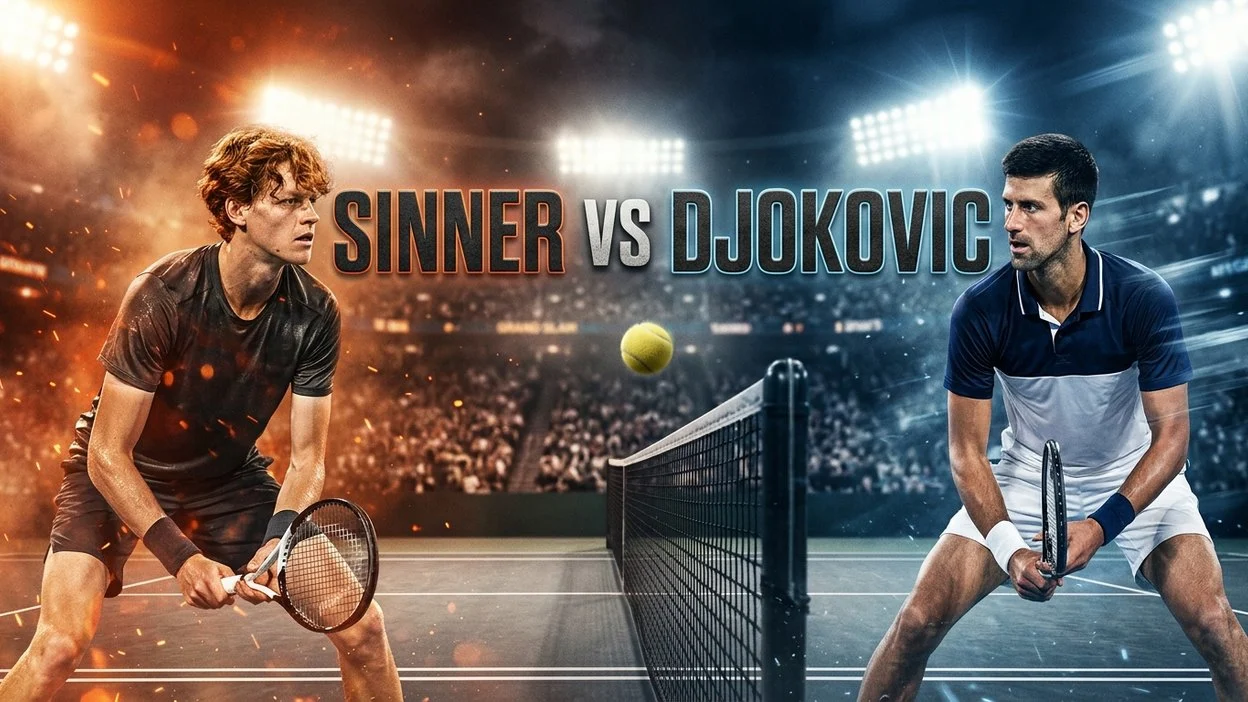
Sinner vs Djokovic is one of the most exciting rivalries in modern men’s tennis. Jannik Sinner represents the new generation of powerful, aggressive players, while Novak Djokovic is one of the most successful players in tennis history. When they meet, the match often becomes a battle between Sinner’s speed and power and Djokovic’s experience, defense, return game, and tactical consistency.
The two players have faced each other on some of the biggest stages in tennis, including Grand Slam tournaments and major events. Their matches are especially interesting because both players can control rallies from the baseline, but they do so in different ways. Sinner often looks to take the ball early and hit through opponents, while Djokovic uses exceptional movement, returning ability, court coverage, and changes of pace to create openings. Understanding their strengths, weaknesses, and head-to-head history makes it easier to appreciate what happens when they face each other.
Quick Answer
Sinner vs Djokovic is a matchup between Jannik Sinner’s aggressive power and Novak Djokovic’s experience, defense, return, and tactical control. Sinner can pressure Djokovic with fast baseline shots and early ball striking, while Djokovic can challenge Sinner with elite movement, deep returning, consistency, and point construction.
Why Do People Compare Sinner and Djokovic?
Sinner and Djokovic are often compared because both have reached the highest level of men’s professional tennis and are capable of dominating from the baseline.
Their matchup is particularly interesting because they combine similar strengths with different approaches.
Both players can:
- Hit powerful groundstrokes
- Take control of baseline rallies
- Attack an opponent’s second serve
- Defend difficult shots
- Change direction effectively
- Compete under pressure
- Win long rallies
- Play at a very high level on major stages
The biggest difference is often how they create an advantage.
Sinner tends to use pace, clean ball striking, and aggressive positioning. Djokovic often relies on anticipation, defense, return quality, flexibility, and tactical adjustments.
First Word: Sinner
Jannik Sinner is an Italian professional tennis player known for his powerful baseline game, fast movement, and aggressive ball striking.
His game is built around taking control of rallies and putting opponents under pressure.
Sinner’s Main Strengths
- Powerful forehand
- Strong two-handed backhand
- Fast movement
- Early ball striking
- Aggressive return game
- Ability to hit through opponents
- Strong baseline consistency
- Effective use of pace
Sinner can turn defense into attack very quickly. His ability to hit powerful shots from both sides makes it difficult for opponents to predict where the next ball will go.
His height and athleticism also help him generate significant power while maintaining good court coverage.
Second Word: Djokovic
Novak Djokovic is a Serbian tennis player widely regarded as one of the greatest players in tennis history.
His game combines outstanding returning, movement, defense, flexibility, consistency, and tactical intelligence.
Djokovic’s Main Strengths
- Elite return of serve
- Exceptional defensive skills
- Two-handed backhand
- Court coverage
- Anticipation
- Rally consistency
- Mental toughness
- Ability to change tactics during matches
Djokovic’s return game is particularly important in this matchup. He can put pressure on an opponent’s serve and often turns neutral points into defensive or offensive opportunities.
His ability to absorb power and redirect the ball can also make it difficult for an aggressive player to maintain control throughout an entire match.
Sinner vs Djokovic Comparison Table
| Feature | Jannik Sinner | Novak Djokovic |
| Nationality | Italian | Serbian |
| Playing style | Aggressive baseline | All-court defensive and counterpunching style |
| Forehand | Powerful and penetrating | Consistent and versatile |
| Backhand | Powerful two-handed backhand | Elite two-handed backhand |
| Return | Aggressive | Exceptional |
| Movement | Fast and athletic | Exceptional court coverage |
| Defense | Strong | Elite |
| Experience | Younger generation | Extremely experienced |
| Point construction | Often based on pace and pressure | Often based on patience and tactical variation |
| Main advantage | Power and aggressive ball striking | Return, defense, experience, and adaptability |
When Should You Focus on Sinner’s Game?
Sinner’s game is especially important when analyzing a match where he is trying to dictate play.
Look at:
- First-strike tennis
- Forehand speed
- Backhand power
- Return position
- Winners
- Unforced errors
- Break-point opportunities
- Rally length
When Sinner gets enough time to set up his groundstrokes, he can put enormous pressure on an opponent.
His ability to attack from the baseline means that Djokovic cannot simply rely on defense. Djokovic often needs to find ways to change the rhythm or force Sinner into uncomfortable positions.
When Should You Focus on Djokovic’s Game?
Djokovic’s strengths become particularly important when an opponent is hitting with heavy pace.
Look at:
- Return points won
- First-serve return quality
- Break points
- Unforced errors forced
- Rally tolerance
- Defensive recovery
- Court positioning
- Performance in important points
Djokovic can use an opponent’s power against them by redirecting the ball and extending rallies.
His return can also prevent Sinner from getting comfortable service games.
10+ Examples of Sinner vs Djokovic Match Dynamics
1. Sinner Attacks the First Ball
If Sinner receives a short ball, he may immediately attack it with a powerful groundstroke.
2. Djokovic Extends the Rally
Djokovic can use his defensive movement to keep a point alive and wait for an opportunity to counterattack.
3. Sinner Targets the Backhand
Sinner can use his powerful baseline shots to test Djokovic’s ability to defend and change direction.
4. Djokovic Attacks the Second Serve
A strong return from Djokovic can immediately put pressure on Sinner before the Italian player establishes a baseline rhythm.
5. Sinner Takes the Ball Early
Taking the ball early reduces an opponent’s reaction time and allows Sinner to maintain an aggressive court position.
6. Djokovic Changes Direction
Djokovic can use cross-court and down-the-line shots to move Sinner around the court.
7. Long Baseline Rally
A long rally can test both players’ movement, consistency, patience, and shot selection.
8. Sinner Uses Serve Plus One
Sinner may use a strong serve followed by an aggressive groundstroke to try to finish the point quickly.
9. Djokovic Uses Defense to Create Offense
Instead of simply defending, Djokovic can turn a difficult defensive position into an attacking opportunity.
10. Sinner Applies Return Pressure
Sinner’s aggressive returning can prevent Djokovic from easily starting points on his terms.
11. Djokovic Uses Experience in Big Moments
Important points can require patience and tactical discipline. Djokovic’s experience at the highest level can become especially valuable during close sets.
12. Sinner Increases the Pace
If Sinner finds his timing, he can raise the speed of rallies and force Djokovic to react quickly.
Common Mistakes When Comparing Sinner and Djokovic
Mistake 1: Looking Only at Grand Slam Titles
Championship totals provide important historical context, but they do not automatically determine who will win a particular match.
Mistake 2: Assuming Power Always Beats Defense
Powerful shots can create problems, but elite defense and returning can neutralize aggressive tennis.
Mistake 3: Ignoring the Serve
The serve can strongly influence who controls the first shot of a point.
Mistake 4: Looking Only at Winners
A player can hit fewer winners but still win because of consistency, returning, defense, and forced errors.
Mistake 5: Ignoring Match Conditions
Surface, court speed, weather, ball conditions, fatigue, and tournament stage can influence the matchup.
Mistake 6: Treating Every Sinner-Djokovic Match as Identical
Players adjust their tactics from match to match. Previous results do not guarantee the same outcome in a future meeting.
Memory Trick
Use this simple way to remember the matchup:
Sinner = Power + Pace + Pressure
Djokovic = Return + Defense + Experience
This is not a complete description of either player, but it provides an easy starting point for understanding their contrasting strengths.
American vs British English
Tennis terminology is generally understood in both American and British English, although some sports vocabulary can differ.
Terms such as serve, return, break point, baseline, forehand, backhand, deuce, advantage, set, and match point are standard in tennis.
The names of tournaments, rankings, and player statistics remain the same regardless of whether an article uses American or British English.
Similar Tennis Terms
Several tennis terms are useful when discussing Sinner vs Djokovic:
- Head-to-head: The record between two players.
- Baseline: The back boundary of the tennis court.
- Forehand: A groundstroke hit on the player’s dominant side.
- Backhand: A groundstroke hit from the opposite side.
- Ace: A serve that the opponent does not touch.
- Break point: A point that could allow the receiver to break serve.
- Tiebreak: A special scoring format used to decide a set under certain conditions.
- Unforced error: An error made without significant pressure from the opponent.
- Winner: A shot that wins the point without the opponent successfully returning it.
- Return: The shot played in response to a serve.
Final Verdict
Sinner vs Djokovic represents an intriguing contrast between a younger, aggressive power game and one of the most complete tactical and defensive games in tennis history.
Sinner can create problems through pace, early ball striking, and powerful groundstrokes. Djokovic can respond with elite returning, movement, defense, consistency, and tactical changes.
The winner of any individual match depends on many factors, including form, surface, serving performance, physical condition, tactics, and execution on important points.
FAQs:
1. Who is better between Sinner and Djokovic?
There is no single answer for every situation. Djokovic has a longer record of major achievements and experience, while Sinner has established himself as one of the leading players of his generation.
2. What makes Sinner difficult for Djokovic?
Sinner’s pace, powerful groundstrokes, movement, and ability to take the ball early can put Djokovic under pressure, especially when Sinner controls the baseline.
3. What makes Djokovic difficult for Sinner?
Djokovic’s return, defense, court coverage, experience, and ability to change tactics can make it difficult for Sinner to maintain an aggressive rhythm.
4. Do Sinner and Djokovic play a similar style?
They share a strong baseline foundation, but their approaches differ. Sinner generally emphasizes pace and aggressive ball striking, while Djokovic combines baseline control with exceptional defense, returning, and tactical variation.
5. Is Sinner younger than Djokovic?
Yes. Sinner belongs to a much younger generation of professional tennis players than Djokovic.
6. What is the biggest strength in the Sinner vs Djokovic matchup?
For Sinner, power and aggressive baseline pressure are major strengths. For Djokovic, returning, defense, movement, and tactical adaptability are key advantages.
7. Can Sinner beat Djokovic?
Yes. Sinner has the skill set required to challenge and defeat Djokovic, but the outcome of any particular match depends on form, conditions, tactics, and execution.
8. What should I watch when Sinner plays Djokovic?
Pay close attention to the serve and return battle, baseline positioning, rally length, break points, unforced errors, and which player controls the middle of the court.
Remember This
The easiest way to understand Sinner vs Djokovic is:
Sinner → aggressive power, pace, and early ball striking
Djokovic → returning, defense, movement, and tactical experience
Both players can attack and defend, so the matchup is more complicated than simply power versus defense.
Conclusion:
Sinner vs Djokovic is a fascinating tennis matchup because both players can dominate from the baseline while using very different strengths. Sinner’s powerful groundstrokes and aggressive court position can put constant pressure on Djokovic, while Djokovic’s return, defense, movement, and tactical intelligence can disrupt Sinner’s rhythm.
The best way to understand their matches is to look beyond the winner and loser. Serving performance, return points, break points, rally patterns, winners, errors, and tactical adjustments can explain why one player gains control. These details make every Sinner-Djokovic meeting worth watching.

Delaney Brooks is a contemporary author celebrated for heartfelt fiction, vivid storytelling, and relatable characters. Her engaging novels inspire readers through emotional depth, creativity, resilience, and memorable literary journeys.