
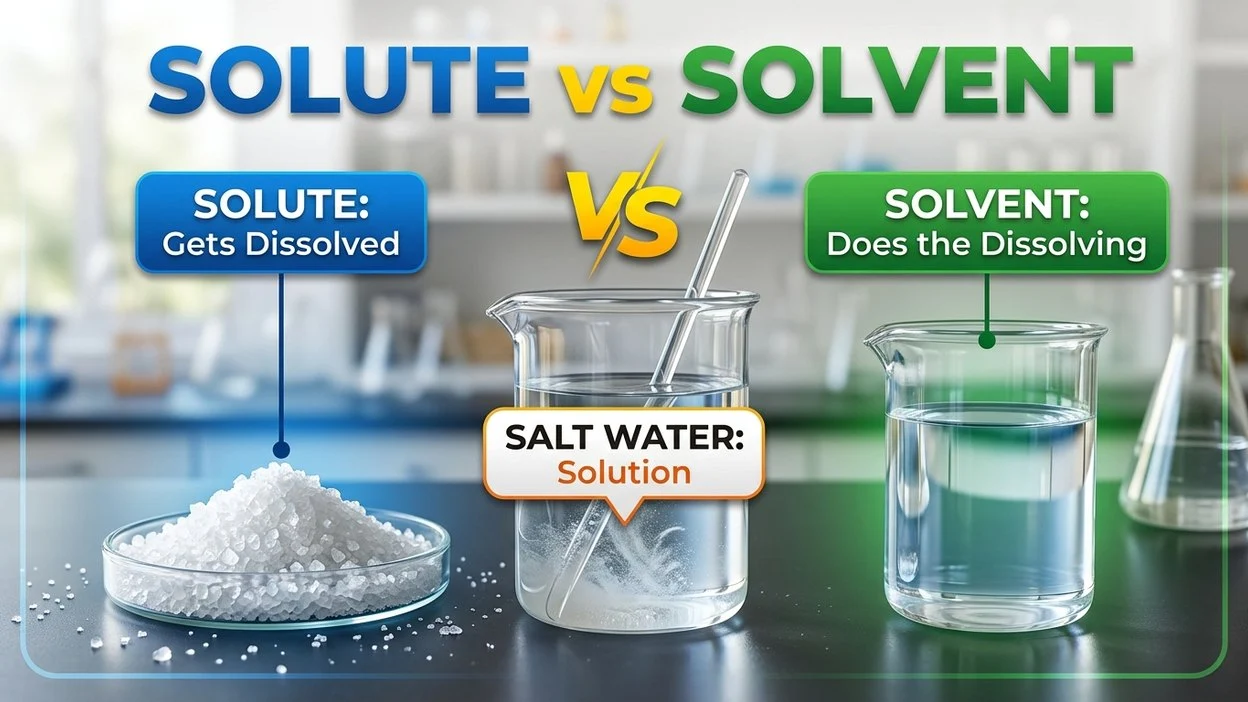
Understanding the difference between a solute and a solvent is important when learning chemistry. Both terms describe substances involved in making a solution, but they have different roles. A solute is the substance that dissolves, while a solvent is the substance that dissolves the solute. For example, when you mix sugar with water, sugar is the solute and water is the solvent.
You can find solutes and solvents in everyday products, including drinks, cleaning solutions, medicines, and laboratory mixtures. Although water is one of the most common solvents, other liquids and even gases can act as solvents in different types of solutions. The amount of solute and solvent can also affect a solution’s concentration and properties. Learning how to identify these two substances makes chemistry easier to understand and helps you describe how mixtures form.
Quick Answer
A solute is the substance dissolved in a solution, while a solvent is the substance that dissolves it. In salt water, salt is the solute and water is the solvent. The solvent is usually present in the greater amount, although the exact amounts and physical states can vary depending on the solution.
Why Do People Confuse Solute and Solvent?
People often confuse solute and solvent because both are essential parts of a solution. They work together to form a uniform mixture, and you usually cannot distinguish the dissolved solute by simply looking at the solution.
The main difference is their role:
- Solute: The substance being dissolved.
- Solvent: The substance that dissolves the solute.
- Solution: The uniform mixture formed when a solute dissolves in a solvent.
For example, when you stir sugar into tea, the sugar dissolves in the liquid. The sugar is the solute, the liquid is the solvent, and the sweetened tea is the solution.
First Word: Solute
A solute is a substance that dissolves in another substance to form a solution. It can be a solid, liquid, or gas, depending on the mixture.
Solutes are often present in smaller amounts than solvents, but this is not a universal rule. The defining feature of a solute is its role in the solution, not simply how much of it is present.
Common Examples of Solutes
- Salt dissolved in water
- Sugar dissolved in tea
- Carbon dioxide dissolved in a soft drink
- Oxygen dissolved in water
- Copper sulfate dissolved in water
What Happens to a Solute?
When a soluble substance is added to a suitable solvent, its particles spread throughout the solvent. This creates a uniform solution.
For example, sugar crystals gradually disappear when stirred into warm water. The sugar has not vanished; its particles have dispersed throughout the water.
Second Word: Solvent
A solvent is the substance that dissolves a solute to form a solution. It is commonly present in the greatest amount and often determines whether a solution is described as solid, liquid, or gaseous.
Water is known as a common solvent because it can dissolve many substances, including salt and sugar. However, not every substance dissolves in water. Oil, for example, does not mix uniformly with water under ordinary conditions.
Common Examples of Solvents
- Water in salt water
- Water in sugar water
- Ethanol in certain chemical solutions
- Acetone in some nail polish removers
- Hexane in certain laboratory and industrial applications
What Does a Solvent Do?
A solvent allows compatible solute particles to spread throughout it. The particles interact with the solvent, helping the solute dissolve.
For example, water dissolves table salt because water molecules interact with the sodium and chloride ions in the salt, allowing them to disperse through the liquid.
Solute vs Solvent: Comparison Table
| Feature | Solute | Solvent |
| Definition | Substance that is dissolved | Substance that dissolves the solute |
| Main role | Becomes distributed throughout the solution | Provides the medium for dissolving |
| Typical amount | Often smaller | Often larger |
| Physical state | Solid, liquid, or gas | Solid, liquid, or gas |
| Example in salt water | Salt | Water |
| Example in sugar water | Sugar | Water |
| Effect on concentration | Its amount helps determine concentration | Its amount affects the solution’s concentration |
| Relationship to solution | Forms part of the solution | Forms part of the solution |
When Should You Use Solute and Solvent?
Use the word solute when describing the substance that dissolves. Use solvent when describing the substance that does the dissolving.
Use Solute When:
- Identifying salt in salt water
- Describing sugar added to tea
- Explaining carbon dioxide in a carbonated drink
- Discussing a dissolved chemical in a laboratory experiment
Use Solvent When:
- Identifying water in a salt solution
- Describing the liquid used to dissolve a substance
- Explaining how ethanol dissolves certain compounds
- Discussing a liquid used in chemical extraction
Remember that not every mixture is a solution. For example, oil and water form separate layers under ordinary conditions, so they do not make a single uniform solution.
12 Examples of Solute vs Solvent
1. Salt Water
- Solute: Salt
- Solvent: Water
Salt dissolves in water and forms a salt solution.
2. Sugar Water
- Solute: Sugar
- Solvent: Water
Sugar particles spread throughout the water when the sugar dissolves.
3. Sweetened Tea
- Solute: Sugar
- Solvent: Water-based tea
The dissolved sugar gives the tea a sweet taste.
4. Carbonated Water
- Solute: Carbon dioxide
- Solvent: Water
Carbon dioxide dissolves in water under pressure to produce carbonated water.
5. Vinegar
- Solute: Acetic acid
- Solvent: Water
Ordinary household vinegar is primarily water with dissolved acetic acid.
6. Air
- Solvent: Nitrogen, the major component
- Solutes: Other gases, including oxygen and argon
Air is a gaseous mixture. Nitrogen is commonly treated as its solvent-like major component in introductory explanations of gas mixtures.
7. Brass
- Solvent-like component: Copper, the major component in common brass alloys
- Solute-like component: Zinc
Brass is a solid alloy made mainly of copper and zinc. The solvent-solute model can describe many alloys, although their structures differ from ordinary liquid solutions.
8. Rubbing Alcohol
- Solutes: Water or isopropyl alcohol, depending on the formulation
- Solvent: The component present in the greater amount
For example, in common 70% isopropyl rubbing alcohol, isopropyl alcohol is the major component and water is also present. The exact classification depends on the mixture’s composition and how the solution is described.
9. A Sugar Syrup
- Solute: Sugar
- Solvent: Water
Sugar dissolves in water to create a concentrated syrup.
10. A Laboratory Copper Sulfate Solution
- Solute: Copper sulfate
- Solvent: Water
The dissolved copper sulfate produces a blue solution.
11. An Iodine Solution
- Solute: Iodine
- Solvent: A suitable solvent, such as ethanol in an alcohol-based iodine preparation
Iodine dissolves in certain solvents more readily than it does in water.
12. A Nail Polish Remover Formulation
- Solute: Depends on the particular formulation
- Solvent: Often acetone or another suitable solvent
Acetone can dissolve many substances used in nail polish. However, not every nail polish remover contains acetone.
Common Mistakes About Solute and Solvent
Mistake 1: Thinking the Solute Must Always Be a Solid
A solute can be a solid, liquid, or gas. Carbon dioxide dissolved in water is an example of a gaseous solute.
Mistake 2: Thinking the Solvent Must Always Be Water
Water is common, but ethanol, acetone, and other substances can act as solvents.
Mistake 3: Assuming the Solvent Is Always the Liquid
Solutions can be gaseous or solid. Air is a gaseous mixture, and certain metal alloys are solid solutions.
Mistake 4: Thinking the Solute Disappears
When a substance dissolves, its particles spread throughout the solvent. The substance has not necessarily disappeared or undergone a chemical reaction.
Mistake 5: Confusing Dissolving With Melting
Dissolving occurs when a substance mixes with a solvent to form a solution. Melting occurs when a solid changes into a liquid because of heating or other changes in conditions.
Memory Trick: How to Remember Solute vs Solvent
Use this simple memory trick:
Solute = substance dissolved.
Solvent = substance that dissolves.
For salt water, ask two questions:
- What is being dissolved? Salt.
- What dissolves it? Water.
Therefore, salt is the solute and water is the solvent.
You can also remember that the word solvent is associated with the action of dissolving, while solute refers to the dissolved substance.
American vs British English
There is no meaningful difference between American and British English in the scientific meanings of solute and solvent. Both terms are used in chemistry education in the United States and the United Kingdom.
Spelling and pronunciation may vary slightly by speaker or educational setting, but the definitions remain the same. Students studying chemistry in either country can use these terms in the same way.
Similar Words
Here are some related chemistry terms that are useful to understand.
- Solution: A uniform mixture formed when one or more solutes dissolve in a solvent.
- Solubility: The ability of a substance to dissolve in a particular solvent under specified conditions.
- Dissolution: The process by which a solute dissolves in a solvent.
- Concentration: The amount of solute present in a given amount of solution.
- Saturated solution: A solution containing the maximum amount of dissolved solute possible under specified conditions.
- Unsaturated solution: A solution that can dissolve more of a particular solute under the same conditions.
- Suspension: A mixture containing particles that are dispersed but do not dissolve completely.
- Mixture: A combination of two or more substances that are physically combined.
Final Verdict: Solute vs Solvent
The main difference between a solute and a solvent is their role in forming a solution. A solute is the substance being dissolved, while a solvent is the substance that dissolves it.
In salt water, salt is the solute and water is the solvent. In other mixtures, the substances may be gases, liquids, or solids. Understanding these roles makes it easier to identify the parts of a solution and learn related chemistry concepts.
FAQs:
1. What is the main difference between a solute and a solvent?
A solute is the substance that dissolves, while a solvent is the substance that dissolves it. Together, they form a solution when the solute dissolves uniformly in the solvent.
2. Is salt a solute or a solvent?
Salt is the solute in salt water because it dissolves in water. Water is the solvent.
3. Is water always a solvent?
No. Water is a common solvent, but other substances, including ethanol and acetone, can act as solvents. The correct choice depends on the mixture.
4. Can a solute be a gas?
Yes. Carbon dioxide dissolved in water is a common example of a gaseous solute. Oxygen dissolved in water is another example.
5. Which is usually present in a greater amount, solute or solvent?
The solvent is usually present in the greater amount, but this is not an absolute rule. The substances’ roles and the type of solution are more important than the amount alone.
6. What is an example of a solute and solvent in everyday life?
In sweetened tea, sugar is the solute and the water-based tea is the solvent. The resulting sweetened tea is the solution.
7. What is the difference between a solute, solvent, and solution?
A solute is the substance being dissolved. A solvent is the substance that dissolves it. A solution is the uniform mixture formed when the solute dissolves in the solvent.
8. Can two liquids form a solution?
Yes. Two liquids can form a solution if they mix uniformly. For example, ethanol and water are miscible, meaning they can mix in any proportion to form a uniform liquid mixture.
Remember This
- Solute: What gets dissolved.
- Solvent: What does the dissolving.
- Solution: The uniform mixture formed.
For example, in sugar water, sugar is the solute, water is the solvent, and sugar water is the solution.
Conclusion:
Solute and solvent are two basic but important chemistry terms. They describe the different roles substances play when a solution forms. A solute dissolves in a solvent, and the resulting solution is uniform throughout when the substances are properly mixed and the solute is soluble under those conditions.
Once you understand the difference, you can identify solutes and solvents in common examples such as salt water, sweetened tea, carbonated drinks, air, and metal alloys. Remember the simple rule: the solute is dissolved, the solvent does the dissolving, and together they form a solution.

Sloane Miller creates captivating fiction filled with suspense, emotion, and unforgettable moments. Her engaging storytelling reflects determination, originality, and imagination, leaving readers inspired long after every novel concludes.