
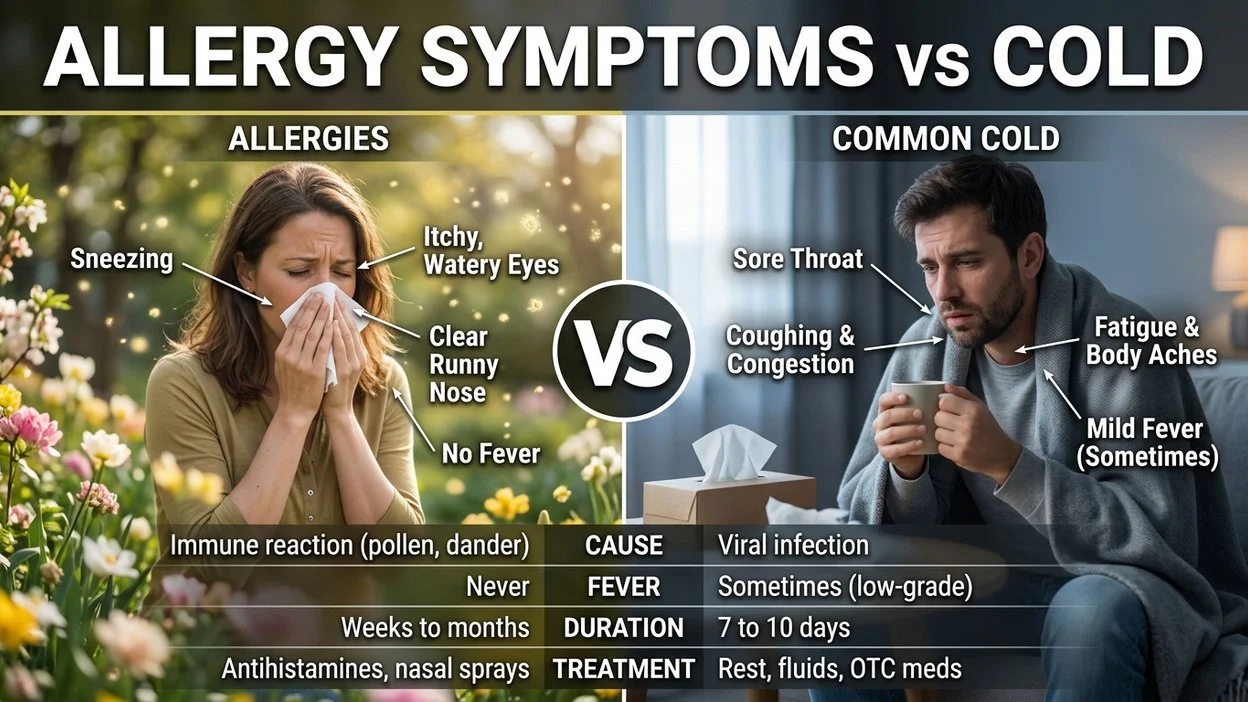
Allergy symptoms and cold symptoms can look very similar, especially when you have a runny nose, sneezing, nasal congestion, or watery eyes. However, allergies are usually caused by the immune system reacting to substances such as pollen, dust mites, or pet dander, while a common cold is caused by a viral infection. Understanding the difference can help you choose the right treatment and know when to seek medical advice.
One of the easiest ways to tell allergies from a cold is to look at how long symptoms last and whether you have a fever or itchy eyes. Allergies may continue for weeks or months as long as you are exposed to a trigger. A cold typically improves within 7–10 days. Both conditions can make you feel uncomfortable, but they affect the body in different ways. Recognizing these patterns can help you understand what might be causing your symptoms.
Quick Answer
Allergies usually cause sneezing, itchy or watery eyes, and a clear runny nose without a fever. A common cold often causes a sore throat, cough, congestion, and sometimes a mild fever. Allergy symptoms may last as long as exposure continues, while cold symptoms typically improve within 7–10 days.
Why Do People Confuse Allergy Symptoms and a Cold?
People often confuse allergies and colds because both affect the nose, throat, and upper respiratory system. They can cause sneezing, congestion, a runny nose, and coughing.
The main difference is the cause:
- Allergies: The immune system reacts to an allergen, such as pollen, mold, dust mites, or pet dander.
- Common cold: A virus infects the upper respiratory tract and causes symptoms such as a runny nose, sore throat, and cough.
The symptoms can overlap, so no single symptom can always tell you which condition you have. Looking at several symptoms together is more useful.
First Word: Allergy Symptoms
An allergy occurs when the immune system reacts to a normally harmless substance. These substances are called allergens.
Common allergy triggers include:
- Pollen from trees, grass, and weeds
- Dust mites
- Pet dander
- Mold spores
- Certain environmental substances
Common Allergy Symptoms
Allergy symptoms may include:
- Frequent sneezing
- Clear, watery nasal discharge
- Itchy nose
- Itchy, red, or watery eyes
- Itchy throat or roof of the mouth
- Nasal congestion
- Postnasal drip
- Coughing caused by throat irritation or postnasal drip
A particularly useful clue is itching. Itchy eyes, an itchy nose, and repeated sneezing are more characteristic of allergies than a common cold.
Allergies usually do not cause a fever or the body aches commonly associated with viral infections.
How Long Do Allergy Symptoms Last?
Allergy symptoms may last for several hours, days, weeks, or even months. Their duration depends on the allergen and how long you remain exposed to it.
For example, seasonal pollen allergies may continue throughout a particular pollen season. Dust mite allergies may cause symptoms throughout the year.
Symptoms may improve when you avoid the trigger or receive appropriate treatment.
Second Word: Cold Symptoms
A common cold is a contagious viral infection that affects the nose and throat. Many different viruses can cause a cold, and symptoms often develop gradually.
Common Cold Symptoms
Cold symptoms may include:
- Runny or blocked nose
- Sneezing
- Sore throat
- Cough
- Mild headache
- Tiredness
- Mild body aches
- Low-grade fever, particularly in children
Nasal discharge may begin clear and become thicker or yellowish as the cold progresses. Yellow or green mucus alone does not mean you have a bacterial infection.
Unlike allergies, a cold may cause a general feeling of being unwell, along with a sore throat, fatigue, or body aches.
How Long Does a Cold Last?
Most common colds improve within 7–10 days, although some symptoms, particularly a cough, can last longer.
Cold symptoms may be more noticeable during the first few days before gradually improving. If symptoms persist without improvement, become severe, or improve and then worsen again, consider seeking medical advice.
Allergy Symptoms vs Cold: Comparison Table
| Feature | Allergies | Common Cold |
| Main cause | Immune reaction to an allergen | Viral infection |
| Sneezing | Often frequent | Common |
| Runny nose | Usually clear and watery | Often clear at first; may thicken |
| Itchy eyes or nose | Very common | Less common |
| Sore throat | Sometimes, often from irritation or postnasal drip | Common |
| Cough | Possible | Common |
| Fever | Not typical | Sometimes, especially in children |
| Body aches | Not typical | May occur |
| Fatigue | Sometimes | Common |
| Symptom onset | After allergen exposure | Often develops gradually after infection |
| Typical duration | As long as exposure continues | Usually 7–10 days |
| Contagious | No | Yes |
| Common triggers | Pollen, dust mites, mold, pet dander | Cold-causing viruses |
When Should You Suspect Allergies or a Cold?
When to Suspect Allergies
Allergies are more likely when:
- Your eyes or nose feel itchy.
- You sneeze repeatedly.
- Your nasal discharge is clear and watery.
- Symptoms appear around pollen, pets, dust, or mold.
- Symptoms return at the same time each year.
- You have symptoms for weeks without developing a fever.
Example: You start sneezing and develop itchy eyes whenever you clean a dusty room. Your symptoms improve after leaving the room. This pattern suggests an environmental allergy.
When to Suspect a Cold
A cold is more likely when:
- You develop a sore throat followed by nasal symptoms.
- You have a cough and feel generally unwell.
- You experience mild body aches or a headache.
- Someone around you recently had a cold.
- Your symptoms gradually improve over about a week.
Example: You develop a sore throat, followed by a runny nose, congestion, and a cough. Your symptoms improve over the next several days. This pattern is consistent with a common cold.
What If You Have Both?
It is possible to have allergies and a cold at the same time. For example, you might have seasonal allergies that cause itchy eyes and sneezing while also developing a viral infection that causes a sore throat and cough.
COVID-19, influenza, and other respiratory infections can also resemble a cold. Consider testing or contacting a healthcare professional when your symptoms, exposure history, or risk factors make these infections a concern.
12 Examples of Allergy Symptoms vs Cold Symptoms
1. Sneezing Every Morning
If you sneeze repeatedly every morning, especially when exposed to dust or pollen, allergies may be responsible. However, sneezing can also occur during a cold.
2. Itchy, Watery Eyes
Itchy, watery eyes are a strong clue for allergies. They are less typical of an uncomplicated common cold.
3. A Sore Throat After Waking Up
A sore throat in the morning can occur with either condition. Allergies may cause postnasal drip, while a cold can directly irritate the throat.
4. A Runny Nose Around Pets
If your nose starts running whenever you spend time around cats or dogs, pet allergies may be a possibility.
5. Symptoms After Someone Sneezes Near You
If you develop respiratory symptoms after close contact with someone who is ill, a viral infection is possible. Symptoms do not necessarily begin immediately after exposure.
6. A Runny Nose That Lasts for Weeks
Persistent symptoms that continue for weeks, especially with itching and no fever, may suggest allergies rather than a single common cold.
7. Nasal Congestion With Body Aches
Congestion accompanied by body aches is more consistent with a respiratory infection than with ordinary environmental allergies.
8. Clear Nasal Discharge
Clear nasal discharge can occur with both allergies and a cold. It is more suggestive of allergies when combined with itchy eyes and repeated sneezing.
9. Yellow or Green Mucus
Yellow or green mucus can develop during a common cold. The color alone cannot reliably distinguish a viral infection from a bacterial infection or prove that antibiotics are needed.
10. Sneezing During Pollen Season
If your symptoms return every spring or during another local pollen season, seasonal allergies may be the cause.
11. A Cough That Continues After a Cold
A cough may persist after other cold symptoms improve. Allergies can also cause coughing, especially when mucus drains down the throat.
12. Fever With Respiratory Symptoms
A fever suggests an infection rather than ordinary allergies. However, the absence of fever does not rule out a viral infection.
Common Mistakes When Comparing Allergies and a Cold
Mistake 1: Assuming Every Runny Nose Is a Cold
Allergies can cause a runny nose even when you feel otherwise well. Consider itching, exposure to allergens, and symptom duration.
Mistake 2: Thinking Clear Mucus Always Means Allergies
Clear mucus occurs in both allergies and the early stages of a cold. Look at the full symptom pattern.
Mistake 3: Believing Allergies Cause Fever
Ordinary environmental allergies do not usually cause a fever. If you have a fever, consider an infection or another cause.
Mistake 4: Assuming Yellow Mucus Means You Need Antibiotics
Mucus color alone does not establish a bacterial infection. Antibiotics do not treat viruses that cause common colds.
Mistake 5: Using the Same Treatment for Both Conditions
Allergy medicines, such as antihistamines, may help allergy symptoms but do not cure a cold. Cold treatments focus on relieving symptoms while the body recovers from the infection.
Memory Trick: Allergy vs Cold
Use this simple memory trick to remember the difference:
Allergy = Itchy
Think of itchy eyes, an itchy nose, repeated sneezing, and symptoms linked to an allergen.
Cold = Infection
Think of a sore throat, cough, possible body aches, and symptoms that usually improve over several days.
Remember: itching strongly suggests allergies, while a sore throat and feeling generally unwell may suggest a cold. These are clues, not definitive diagnostic tests.
American vs British English
The words allergy and cold have essentially the same meanings in American and British English.
However, some related terms differ:
- Common cold: Used in both American and British English.
- Runny nose: Common in American English.
- Runny nose or a streaming nose: Both are understood in British English, with streaming nose more common in some contexts.
- Nasal congestion: Common in medical language in both varieties.
- Blocked nose: Common in everyday British English; also understood in American English.
- Hay fever: Common in both countries, particularly for seasonal pollen allergies.
Regardless of the English variety, the main medical distinction remains the same: allergies are immune reactions to allergens, while a common cold is a viral infection.
Similar Words and Related Conditions
Understanding related terms can help you describe your symptoms more accurately.
- Hay fever: An allergic reaction to airborne allergens, often pollen, that causes sneezing, itching, and a runny or blocked nose.
- Allergic rhinitis: Inflammation of the nose caused by allergens.
- Common cold: A viral infection of the upper respiratory tract.
- Influenza (flu): A respiratory viral infection that often causes more pronounced fever, body aches, and fatigue than a common cold.
- COVID-19: A viral illness that can cause congestion, a sore throat, cough, fatigue, and other symptoms.
- Sinusitis: Inflammation of the sinuses that may cause facial pressure, congestion, and nasal discharge.
- Nonallergic rhinitis: Nasal symptoms triggered by factors such as smoke, strong odors, or temperature changes rather than an allergic reaction.
These conditions can share symptoms, so persistent or severe symptoms may need professional evaluation.
Final Verdict: Allergy Symptoms vs Cold
The main difference between allergy symptoms and cold symptoms is their cause and typical pattern.
- Allergies are more likely when you have itchy eyes, frequent sneezing, clear nasal discharge, and symptoms that continue with exposure to allergens.
- A cold is more likely when you have a sore throat, cough, fatigue, possible body aches, and symptoms that improve over about 7–10 days.
Neither pattern confirms a diagnosis on its own. If you are unsure, consider your exposure history, symptom duration, and other symptoms.
FAQs:
1. How can I tell if I have allergies or a cold?
Itchy eyes, an itchy nose, repeated sneezing, and symptoms linked to pollen or dust suggest allergies. A sore throat, cough, fatigue, and symptoms that improve over several days suggest a cold. Because the symptoms overlap, these clues cannot confirm the cause.
2. Can allergies cause a sore throat?
Yes. Allergies can cause a sore or irritated throat when mucus drains down the back of the throat. A cold can also cause a sore throat, so consider other symptoms when deciding what may be responsible.
3. Do allergies cause a fever?
Ordinary environmental allergies do not typically cause a fever. A fever may suggest a viral infection or another medical condition rather than allergies alone.
4. How long do allergy symptoms last compared with a cold?
Allergy symptoms may last for weeks or months if exposure to an allergen continues. Most common colds improve within 7–10 days, although a cough can last longer.
5. Can a cold turn into allergies?
No. A cold does not turn into an allergy because they have different causes. However, someone can have both conditions, and lingering symptoms after an infection may be confused with allergies.
6. Do antihistamines help a common cold?
Antihistamines are mainly used to relieve allergy symptoms. Some antihistamines may provide limited relief for certain cold symptoms, but they do not cure the infection. The benefits depend on the medicine and the symptoms being treated.
7. When should I see a doctor for allergy or cold symptoms?
Seek medical advice if symptoms are severe, persist without improvement, or worsen after initially getting better. Get urgent medical help for difficulty breathing, chest pain, or other severe symptoms. Swelling of the tongue or throat or difficulty breathing after allergen exposure may indicate a serious allergic reaction and requires emergency care.
Remember This
- Itchy eyes and nose: More suggestive of allergies.
- Sore throat and body aches: More suggestive of a cold or another infection.
- Symptoms lasting for weeks: May indicate ongoing allergies.
- Symptoms improving within 7–10 days: Consistent with the usual course of a common cold.
- Fever: Not typical of ordinary environmental allergies.
- Colored mucus: Does not identify the cause on its own.
Conclusion:
Allergy symptoms and cold symptoms often overlap, but understanding their causes can help you recognize useful clues. Allergies commonly cause itching, watery eyes, repeated sneezing, and symptoms linked to particular triggers. A common cold more often causes a sore throat, cough, fatigue, and symptoms that gradually improve over several days.
Pay attention to how your symptoms begin, how long they last, and whether you have a fever or itchy eyes. Rest, fluids, avoiding known allergens, and appropriate symptom relief may help, depending on the cause. If symptoms are severe, persistent, or unusual, consult a healthcare professional rather than relying on symptoms alone to make a diagnosis.

Delaney Brooks is a contemporary author celebrated for heartfelt fiction, vivid storytelling, and relatable characters. Her engaging novels inspire readers through emotional depth, creativity, resilience, and memorable literary journeys.