
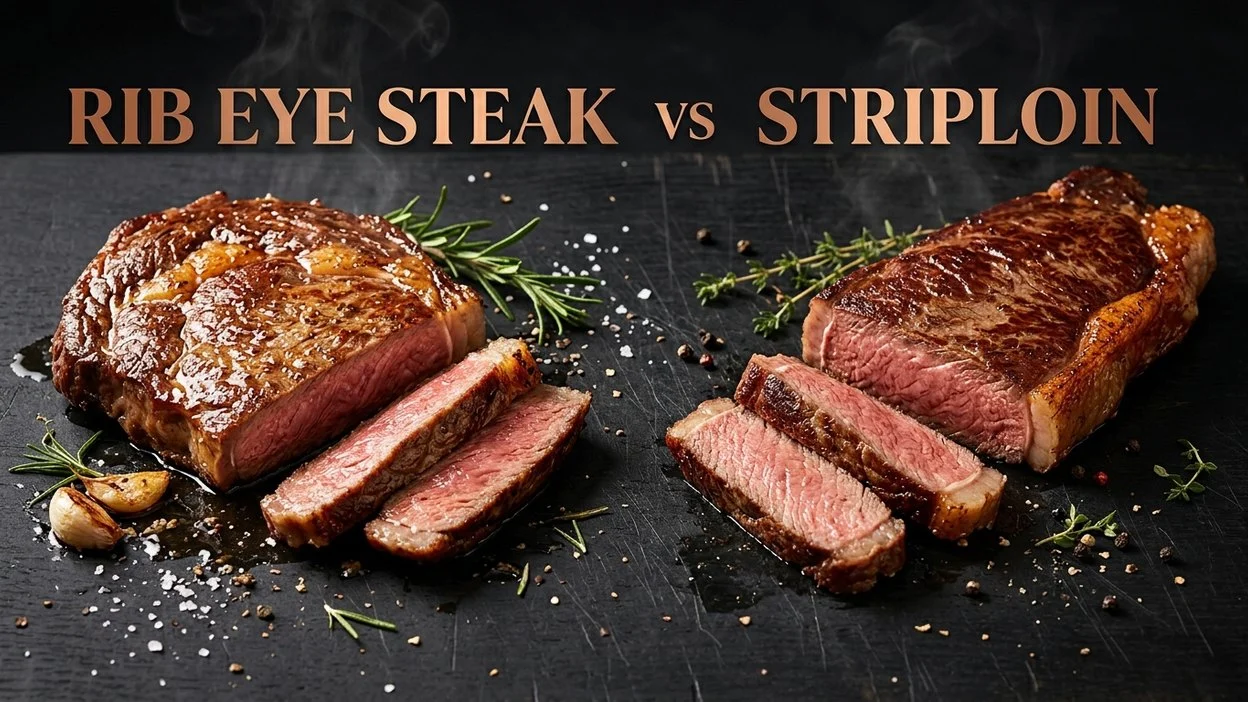
Rib eye steak and striploin are both popular beef cuts, but rib eye is usually richer, more marbled, and more tender, while striploin is leaner, firmer, and often has a stronger beefy texture. The better choice depends on whether you prefer rich flavor and tenderness or a leaner steak with a satisfying bite.
Both cuts come from the loin area of the animal, but they are taken from different sections and have different levels of fat. Rib eye is cut from the rib section and is known for its visible marbling and buttery texture. Striploin, also called New York strip in the United States, comes from the short loin and typically has less internal fat. These differences affect flavor, tenderness, cooking, and price.
Quick Answer
Rib eye is generally the better choice for maximum marbling, richness, and tenderness. Striploin is a better option if you prefer a leaner steak with a firmer bite and strong beef flavor. Both are excellent for grilling, pan-searing, or broiling, and the best choice depends on personal taste.
Why Do People Confuse Rib Eye and Striploin?
Rib eye and striploin are often confused because both are premium steak cuts and are commonly served at steakhouses.
They can also look similar when displayed in a butcher shop. Both can have excellent marbling, both can develop a flavorful crust when cooked properly, and both work well with simple seasonings.
The biggest differences are:
- Location: Rib eye comes from the rib section; striploin comes from the short loin.
- Fat: Rib eye usually has more marbling.
- Texture: Rib eye is typically softer and more buttery.
- Flavor: Both are flavorful, but rib eye tends to taste richer because of its fat.
- Shape: Striploin often has a more uniform steak shape.
- Leanness: Striploin is generally leaner.
First Word: Rib Eye Steak
Rib eye steak is cut from the rib section of beef, specifically from the longissimus muscle and surrounding tissues.
Its biggest feature is marbling, which refers to small streaks of intramuscular fat distributed throughout the meat.
As the steak cooks, some of this fat melts and contributes to a rich, juicy texture.
What Makes Rib Eye Special?
Rib eye is popular because it offers:
- Heavy or moderate marbling
- Rich beef flavor
- A juicy texture
- Tender meat
- A buttery mouthfeel
- Excellent results from high-heat cooking
Rib eye can be sold bone-in or boneless. A bone-in rib eye is sometimes called a cowboy steak, although terminology can vary depending on the butcher and market.
Second Word: Striploin
Striploin is a beef cut from the short loin. In the United States, the steak cut from this area is commonly known as a New York strip or New York strip steak.
Striploin generally has less internal marbling than rib eye, although a high-quality striploin can still be beautifully marbled.
It tends to have:
- A firmer texture
- Strong beef flavor
- Less internal fat than rib eye
- A satisfying chew
- A relatively uniform shape
- A good balance between tenderness and leanness
Striploin is an excellent choice for people who want a premium steak without as much richness as rib eye.
Rib Eye vs Striploin Comparison Table
| Feature | Rib Eye | Striploin |
| Cut location | Rib section | Short loin |
| Common U.S. name | Rib eye | New York strip |
| Marbling | Usually higher | Usually moderate |
| Fat content | Generally higher | Generally lower |
| Texture | Very tender and buttery | Firm and tender |
| Flavor | Rich and beefy | Strong and beefy |
| Juiciness | Usually very juicy | Juicy when cooked properly |
| Shape | Can be less uniform | Usually more uniform |
| Best for | Rich, indulgent steak | Balanced, leaner steak |
| Common cooking methods | Grilling, pan-searing, broiling | Grilling, pan-searing, broiling |
| Bone-in option | Common | Available in some markets |
| Best choice for | Fat and tenderness lovers | People who prefer a firmer bite |
When Should You Choose Rib Eye?
Choose rib eye when you want a rich, juicy, highly marbled steak.
It is especially suitable for:
- Special dinners
- Steakhouse-style meals
- Grilling
- Cast-iron cooking
- Pan-searing
- People who enjoy visible marbling
- People who prefer a soft, buttery texture
Rib eye is also a strong choice when you plan to season the steak simply with salt and pepper. Its natural fat provides much of the flavor.
When Should You Choose Striploin?
Choose striploin when you want strong beef flavor with a firmer, less fatty texture.
It works well for:
- Weeknight steak dinners
- Grilling
- Pan-searing
- Steak sandwiches
- Steak salads
- People who prefer less fat
- Meals where you want a clean beefy flavor
Striploin can also be a good middle ground for diners who find rib eye too rich but still want a premium steak.
10+ Examples of Rib Eye vs Striploin
1. Rich Steak Dinner
For a rich steak dinner with butter, roasted potatoes, and vegetables, rib eye is an excellent choice because its marbling adds richness.
2. Leaner Steak Meal
If you prefer a steak with less internal fat, striploin may be the better option.
3. Outdoor Grilling
Both cuts work very well on a hot grill. Rib eye develops a rich crust, while striploin produces a firm, flavorful steak.
4. Cast-Iron Cooking
Rib eye performs especially well in a hot cast-iron skillet because its fat can help create a flavorful crust.
5. Simple Seasoning
Both steaks can be seasoned with salt and black pepper. Rib eye often needs little additional flavor because of its natural richness.
6. Steak Sandwich
Striploin can work particularly well when sliced thinly for sandwiches because its firm texture holds together nicely.
7. Steak Salad
Either cut can be sliced over salad, but striploin may suit people who prefer a less fatty bite alongside fresh vegetables.
8. Special Occasion
Rib eye is often chosen for celebrations because of its luxurious texture and rich flavor.
9. Family Dinner
Striploin can be a practical choice for a family meal when diners have different preferences about fat.
10. Bone-In Steak
If you want a dramatic bone-in presentation, a bone-in rib eye is a popular option.
11. Strong Beef Flavor
Both steaks have a strong beef flavor, but the experience differs. Rib eye combines beef flavor with rich fat, while striploin tends to provide a cleaner, firmer beefy bite.
12. High-Heat Cooking
Both cuts are suitable for high-heat methods such as grilling, broiling, and pan-searing. The goal is to develop a browned crust without overcooking the center.
Common Mistakes
Mistake 1: Assuming Rib Eye Is Always More Tender
Rib eye is generally very tender, but the final texture depends on factors such as meat quality, aging, thickness, and cooking.
Mistake 2: Thinking Striploin Is Tough
A properly selected and cooked striploin can be quite tender. Its firmer texture should not automatically be confused with toughness.
Mistake 3: Judging Quality Only by Fat
Marbling is important, but other factors such as aging, grade, thickness, and cooking technique also influence steak quality.
Mistake 4: Overcooking Rib Eye
Extra cooking can cause a steak to lose moisture and become firmer. Rib eye’s fat does not make it impossible to overcook.
Mistake 5: Using the Same Cooking Time for Every Steak
Thickness matters. A thick steak and a thin steak can require very different cooking times even when using the same cooking method.
Mistake 6: Cutting the Steak Immediately
Allowing a cooked steak to rest briefly before slicing can help the meat retain more of its juices.
Memory Trick
Use this simple trick:
Rib eye = Rich and marbled
Think of the “R” in Rib eye as Rich.
Striploin = Strong and leaner
Think of striploin as the option for a firmer, cleaner beef bite.
So remember:
Rib eye → richer and fattier
Striploin → leaner and firmer
American vs British English
The names for beef cuts can vary between countries, which can make steak terminology confusing.
In the United States, New York strip or strip steak commonly refers to the steak cut from the short loin.
In the United Kingdom, sirloin steak is a common term for a related cut, but international beef-cut terminology does not always match perfectly.
Rib eye is widely understood in both American and British food contexts, although butchers and regions may use slightly different names.
When buying steak internationally, it is useful to ask the butcher where the cut comes from rather than relying only on the name.
Similar Words
Here are some related steak terms:
- Rib eye: A richly marbled steak from the rib section.
- Striploin: A steak cut from the short loin.
- New York strip: Common American name for a strip steak.
- Sirloin: A beef-cut term that can refer to different sections depending on the country.
- Tenderloin: A very tender, lean cut that is commonly used for filet mignon.
- T-bone: A steak containing a T-shaped bone with portions of tenderloin and strip.
- Porterhouse: Similar to a T-bone but generally has a larger tenderloin portion.
- Marbling: Intramuscular fat distributed through the meat.
- Dry-aged: Beef that has been aged in controlled conditions to develop flavor and tenderness.
- Wet-aged: Beef aged in sealed packaging under controlled refrigeration.
Final Verdict
Rib eye is the better choice if you want maximum richness, marbling, juiciness, and a buttery texture. Striploin is the better choice if you prefer a leaner steak with a firmer texture and strong beef flavor.
There is no universal winner. For a rich steakhouse experience, rib eye is hard to beat. For a balanced steak with less internal fat and a satisfying bite, striploin is an excellent choice.
FAQs:
1. Is rib eye better than striploin?
It depends on your preference. Rib eye usually has more marbling and a richer, juicier texture, while striploin is generally leaner and firmer.
2. Which is more tender, rib eye or striploin?
Rib eye is generally considered more tender because of its marbling and muscle characteristics. However, steak quality, aging, thickness, and cooking technique can significantly affect tenderness.
3. Which steak has more fat?
Rib eye generally has more intramuscular fat than striploin. The exact amount varies depending on the individual steak and its grade.
4. Is striploin the same as New York strip?
In American usage, New York strip commonly refers to a steak cut from the striploin area of the short loin. Naming conventions can vary between countries.
5. Which steak is better for grilling?
Both rib eye and striploin are excellent for grilling. Rib eye is particularly good for people who enjoy rich marbling, while striploin is ideal for a firmer, leaner steak.
6. Which is healthier, rib eye or striploin?
Striploin is generally leaner, so it may contain less fat than rib eye. However, the nutritional profile depends on the specific cut, trimming, portion size, and preparation method.
7. Which steak is better for beginners?
Both are beginner-friendly when cooked properly. Striploin can be a good starting point for someone who prefers a leaner steak, while rib eye is ideal for someone who enjoys rich, fatty beef.
8. Can you cook rib eye and striploin the same way?
Yes. Both can be grilled, pan-seared, or broiled. However, cooking time depends on thickness, starting temperature, cooking method, and desired doneness.
Remember This
If you want richness and marbling, choose rib eye.
If you want a leaner texture and firm beefy bite, choose striploin.
The easiest comparison is:
Rib eye = rich, fatty, juicy, buttery
Striploin = leaner, firm, beefy, balanced
Conclusion:
Rib eye and striploin are both excellent premium beef cuts, but they offer different eating experiences. Rib eye is famous for its marbling, rich flavor, and juicy texture, making it a favorite for people who enjoy a luxurious steak. Striploin provides a firmer bite with strong beef flavor and generally less internal fat.
Your choice ultimately comes down to personal taste. Pick rib eye for a rich and indulgent meal, or choose striploin when you want a slightly leaner steak with a classic beefy texture. Either cut can produce an excellent meal when you choose good-quality beef and cook it carefully.

Delaney Brooks is a contemporary author celebrated for heartfelt fiction, vivid storytelling, and relatable characters. Her engaging novels inspire readers through emotional depth, creativity, resilience, and memorable literary journeys.